NEW AI agent starter — ship in 3 weeks, not 3 quarters

Ship software that thinks,
not slideware that sits.

Rack InfoTech is an AI software and automation studio for teams tired of hearing "let's schedule a workshop." We build the AI agents, SaaS products, and custom systems that quietly run your business by the time your competitor's kickoff deck is finished.
120+
Products shipped
40M+
Automated events / month
10yr
In production
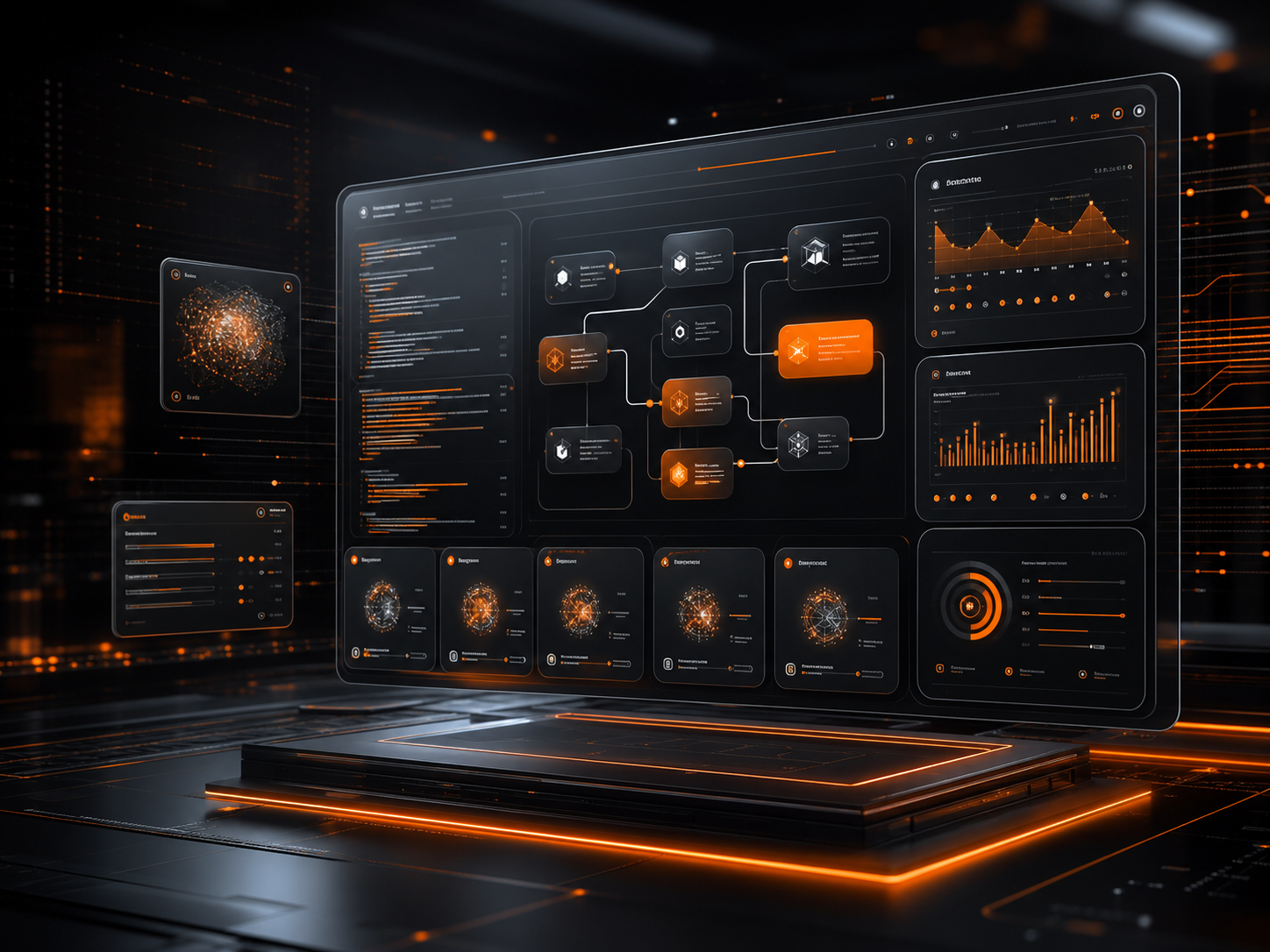
rack.ai / operations
Active agents
14
↑ 3 deployed this week
Tickets deflected
2,481
↑ 22% MoM
Throughput — last 24h
Invoice-triage agent processed 312 docs
Support co-pilot routed 89 conversations
Lead-scoring model updated · v2.4
98.7% uptime SLA
4.2× faster support

Trusted by ambitious teams shipping into production

Why Rack InfoTech

Built like a product team,
priced like a partner.

Most agencies bill hours. We bill outcomes — throughput, revenue, time-to-decision. Every engagement starts with the metric we're moving.

3-week discovery to running prototype.

A working system, not a specification. You'll see real data flowing through real agents before the second invoice.

4.2×

Average throughput lift measured 90 days post-launch across our automation deployments.

Enterprise-grade by default

SOC 2 controls, encrypted at rest, audit logs on every action — not an upsell.

Own the code, keys, and model

Nothing lives on our servers you don't have full access to. Zero vendor lock-in on day one.

ROI, or the sprint's on us

Milestones are tied to measurable business outcomes — not story points completed.

A senior team every sprint, not just at the pitch.

The engineer who scopes the work is the engineer who ships it. No offshoring the hard parts to a JIRA ticket after signing.

Industries we serve

Deep enough in your domain
to argue back.

We've shipped in enough verticals to know where the sharp edges are — and where "AI-powered" is a headline vs. a real lever.

Fintech & Payments
Healthcare & Life Sciences
Legal & Compliance
E-commerce & Retail
Logistics & Supply Chain
Marketing Agencies
Real Estate & PropTech
Education & EdTech
How we work

Five stages.
Every one of them ends in something you can click.

We resist the temptation to disappear for four weeks and emerge with a PDF. Every stage produces working software or a real, testable artifact.

Step 01 · Week 1

Discovery sprint

Two working sessions, one written brief, one shared roadmap — priced flat, no strings.

Step 02 · Week 2

Architecture

System design, model selection, data-flow diagrams — reviewed with your engineering lead.

Step 03 · Weeks 3-6

Build in the open

Weekly demos on staging. You test what we ship the day we ship it.

Step 04 · Week 7

Launch & measure

Production cutover, monitoring hooked to your stack, launch retro on day 5.

Step 05 · Ongoing

Iterate & scale

Optional retainer — new agents, new modules, or a clean handoff to your team.

Technology

A stack chosen for
uptime, not resumes.

We pick tools our clients can hire for and our engineers can debug at 3am. No mystery frameworks, no proprietary black boxes.

AI & ML

OpenAI Anthropic Claude LangChain LangGraph Pinecone Weaviate Hugging Face

Frontend

Next.js React Vue Tailwind TypeScript Astro

Backend

Node.js Python Go Django FastAPI Laravel

Mobile

Swift Kotlin Flutter React Native

Data & Storage

PostgreSQL MongoDB Redis Snowflake Kafka

Cloud & DevOps

AWS GCP Azure Docker Kubernetes Terraform
Client voices

The kind of quotes
you can only get by shipping.

"
Rack replaced a six-person triage team with three well-designed agents in eight weeks. Ticket resolution dropped from 14 hours to 42 minutes — and no one on the team was laid off. They were redeployed to work customers actually pay for.
MR
Meera Rajagopalan
COO, Halogen Health
★★★★★
Their discovery sprint alone was worth the retainer. We stopped a rebuild we'd already sold internally.
DK
Daniel Kwan
VP Engineering, Ferrolane
★★★★★
A partner who says "that's the wrong thing to build" is worth ten who say yes to everything.
AS
Anika Shah
Founder, Oakhaus
About the studio

We started in 2016 as a two-person consultancy. We're still small on purpose.

Rack InfoTech is 34 engineers, designers, and ML practitioners across Pune, Bengaluru, and remote. Small enough that the founding engineers still write code. Big enough that we can staff four concurrent enterprise engagements.

120+
Products shipped since 2016
34
Team members
18
Countries served
96%
Client retention
10yr
In business
Let's talk

Bring us the metric
you can't move.

30-minute call, no deck. We'll tell you honestly whether we'd take on the work — and if we would, what the first four weeks look like.

Studio · Est. 2016

A small studio building AI & software for teams that ship for a living.

We're 34 people who write code, run models in production, and pick up on-call rotations. If you're looking for an agency that will hand off to a project manager after signing, we probably aren't the right fit.

Two engineers, one rented desk, and a client who needed CRM by Monday.

Rack InfoTech started in a coworking space in Pune in 2016. The first project was a custom CRM for a logistics company that had outgrown four different SaaS tools and couldn't find one that understood consignment freight. We shipped it in six weeks. They're still on it.

The pattern repeated. Businesses would call us not because they wanted custom software — they hate having custom software — but because the off-the-shelf stack had failed them in some specific, expensive way. By 2019 we were shipping AI-adjacent projects: OCR pipelines, chat routing, recommendation engines. In 2022 we bet the studio on agentic AI when most of the industry was still calling it "GPT wrapper."

Today the studio is 34 people across engineering, ML, design, and delivery. We turn down about two-thirds of the projects that come in. Not because we're precious about the work — because we've learned that engagements without a clear metric to move quietly turn into consulting retainers that don't produce anything worth shipping.

We're deliberately not a hundred-person shop. Bigger studios sell bigger contracts. That has never been our game.

Mission & vision

Why we bother.

Mission

Put AI and custom software within reach of teams that don't have a research lab — startups, SMEs, and unfashionable industries that quietly run the economy.

Vision

A world where the difference between an ambitious business idea and a shipped product is measured in weeks — and the engineering doesn't feel like a compromise.

Values

Six things we won't compromise on.

i.

Ship, then iterate

Working software beats a beautiful roadmap. We'd rather explain a rough v1 than defend a polished spec.

ii.

Own the outcome, not the ticket

Our engineers care whether the metric moved. If the story is closed and the revenue isn't up, it isn't done.

iii.

No mystery meat

You get the code, the keys, the model weights, the docs. Nothing about our work is a black box you can't inspect.

iv.

Small > scaled

We staff for depth, not headcount. The founding engineers still push code.

v.

Say the honest thing

If the project shouldn't exist, we'll say so — before the contract, not after. It's cost us revenue and earned us referrals.

vi.

Boring in the right places

PostgreSQL, TypeScript, well-tested APIs. We save the exotic choices for the moments they earn.

The approach

Product engineering,
not IT services.

We think about the software the way a product team at a great startup would — because most of us used to be one. Every engagement is scoped, staffed, and measured with that in mind.

  • Small, senior team on every project — no matter the size
  • Weekly demos, not monthly status updates
  • Metrics agreed up front and reported honestly
  • Handover documentation from day one, not day 90
  • SLAs that survive contact with production
Engagement · Playbook
01
Discovery sprint
Flat fee, 5 days, ends in a written technical brief.
02
Milestone-based SOW
You approve each milestone before we start the next.
03
Weekly demo Fridays
Never surprise you. Never let a sprint drift.
04
Handover, not lock-in
Your team could take over the project on any Friday.
The people

Senior on every project.
Small enough to argue over lunch.

Every engagement is fronted by a founding engineer or a principal. The person who scopes your project ships it.

AK
Founder · Principal Engineer
Aryan Kulkarni
SN
Head of AI
Sneha Nadkarni
RM
Principal — Systems
Rahul Mehta
PT
Design Lead
Priya Tandon
VJ
Head of Delivery
Vikram Joshi
NB
Mobile Lead
Neha Bhat
KS
DevOps & SRE
Karan Singh
MI
Data & ML
Meera Iyer
Say hi

Curious how we'd approach
your problem?

Book a 30-minute call with a founding engineer. No sales team, no gate.

Capabilities

Five services.
One question we ask before starting any of them.

"What does success measurably look like ninety days after we ship?" If the answer isn't a number, we usually shouldn't take the project.

The engagement

Five stages, six weeks to production for most engagements.

Step 01

Discovery sprint

One week, flat-priced, ends in a technical brief.

Step 02

Architecture

Data flows, models, integrations — reviewed with your team.

Step 03

Build in the open

Weekly demos on staging. You test the day we ship.

Step 04

Launch & measure

Monitoring hooked in. Launch retro on day 5.

Step 05

Iterate

Retainer, handover, or both.

Technologies

Boring in the right places.
Sharp in the ones that matter.

AI & ML

OpenAIAnthropicLangChainPineconeWeaviate

Frontend

Next.jsReactVueTailwind

Backend

Node.jsPythonGoFastAPI
Answers

Frequently asked.

How quickly can you start?
Discovery sprints usually kick off within 5-10 business days of a signed engagement letter. Full builds start immediately after discovery, once we've agreed the scope and staffed the team.
What does a typical engagement cost?
Discovery sprints are flat-fee. Build engagements are milestone-priced and typically fall between US $28k for a focused MVP and US $180k+ for enterprise systems. We'll price the specific project after the discovery week.
Do you work on retainer?
Yes. Most projects convert to a monthly retainer after launch — new features, model tuning, ongoing SRE. Retainers are month-to-month, no annual lock-in.
Who owns the code and the models?
You do. Source code, model weights (when we've fine-tuned), infrastructure — everything ships to your accounts. Rack holds nothing you can't inspect or take home.
Can you work with our existing team?
Absolutely — about a third of our engagements are embedded. We slot into your sprints, use your repos, and follow your engineering culture.
Do you sign NDAs and DPAs?
Yes to both, before any technical detail is exchanged. We're happy to work under your paper.
Start here

One week.
One honest answer.

Book a discovery sprint. You leave with a written technical brief and a fair estimate, whether you engage us or not.

Service · 01

AI agents that quietly run the parts of your business you used to hire for.

Not chatbots that read your FAQ back to you. Real agentic systems — planning, using tools, taking action, learning from feedback — running against production data with humans in the loop only where it matters.

42m
avg. ticket resolution
4.2×
throughput lift
3wk
to first production agent
98.7%
uptime SLA
What we build

Five kinds of AI systems.
All of them earn their keep.

01 · Flagship

AI Workflow Automation

End-to-end workflows where a chain of agents plans, calls tools, and hands off to humans only for the calls that need judgement. Typical wins: invoice triage, contract review, KYC prep, support routing.

  • LangGraph
  • Temporal
  • Human-in-loop
02

AI Agents

Task-specific agents with tools, memory, and observability. Not demos — production.

03

Chatbots & Copilots

Support, sales, and internal copilots grounded in your data with clean RAG and citations.

04

Business Process Automation

The unglamorous stuff — form intake, data reconciliation, cross-system sync — automated with the AI where it earns its cost, and plain code everywhere else. We don't put a model in the loop just to say we did.

  • OCR
  • ETL
  • Zapier
  • n8n
05

Integrations

Salesforce, HubSpot, Slack, Notion, Zendesk, SAP — clean two-way sync with retries, dead-letter queues, and audit logs. Nothing about your integrations should surprise you at 2am.

  • Salesforce
  • HubSpot
  • Slack
  • SAP
Benefits

What changes when the agent is doing it.

Faster by an order of magnitude

Tasks that took hours run in minutes — with an audit trail so you can prove it later.

Consistency you can measure

Same policy applied every time — with tests that catch regressions before your users do.

Human effort, redirected

Your team spends its hours on the calls that need judgement, not the ones that need copy-paste.

Technologies

The tools we actually use.

No mystery frameworks. Everything here is documented, hire-able, and battle-tested.

Foundation models

OpenAI GPT-4.xAnthropic ClaudeGeminiLlama 3Mistral

Agent frameworks

LangGraphLangChainInstructorDSPy

Vector & RAG

PineconeWeaviatepgvectorQdrant

Orchestration

Temporaln8nZapierPrefect

Observability

LangSmithLangfuseHelicone

Deployment

AWS BedrockAzure OpenAIVercelModal
FAQ

Common questions about AI automation.

How do you decide when to use an LLM vs. plain code?
If the task can be expressed as clear rules or a schema, we write plain code — it's cheaper, faster, and easier to test. LLMs come in where the input is ambiguous, unstructured, or requires judgement. Most working systems we build are 70% deterministic code and 30% model.
What about hallucinations and safety?
Every production agent we ship has bounded tool access, structured outputs where possible, evaluations that run in CI, and human review gates for high-stakes decisions. We don't ship agents that can take irreversible actions without oversight.
Do we need to send our data to OpenAI?
No. We deploy on AWS Bedrock, Azure OpenAI, or self-hosted open-weight models depending on your compliance needs. Data never leaves your cloud if you don't want it to.
How do you measure whether an agent is working?
Two layers. Business metrics (throughput, resolution time, deflection rate) reported weekly. Model evals (accuracy, groundedness, tool-use correctness) running on every deployment. Both go to a dashboard you own.
What if the model gets deprecated?
We build model-agnostic. Every system uses an abstraction over the provider, and our evals let you swap models without regressing.

Bring the workflow.
We'll bring the agents.

30-minute call with an ML engineer. If the automation makes sense, we'll say so. If it doesn't, we'll say that too.

Service · 02

Software that fits your business — not the other way around.

CRMs, ERPs, internal portals, dashboards, and enterprise systems built for how your business actually operates. Boring where it should be, sharp where it matters.

What we build

Custom systems, without the "custom" tax.

01 · Flagship

Custom Business Applications

Line-of-business software modeled around how your team actually works — inventory, ops, scheduling, quoting, whatever the spreadsheet has grown into. Web-first, mobile-ready.

  • Web app
  • Ops portal
  • Role-based access
02

CRM Development

Sales pipelines, contact intelligence, integration into your marketing stack — built to your process.

03

ERP Development

Finance, inventory, HR, procurement — as one system or modular, on your infrastructure.

04

Enterprise Software

SSO, RBAC, audit trails, data residency, SOC 2 controls — enterprise-ready without waiting for the enterprise sprint.

  • SSO
  • RBAC
  • Audit
  • SOC 2
05

Dashboards & Portals

Customer portals, partner portals, internal analytics dashboards — the daily surfaces where trust lives or dies.

  • Customer
  • Partner
  • Analytics
Development process

Five stages.
Sixteen weeks or less to production.

Step 01

Discovery

Workflow interviews, data audit, scope sign-off.

Step 02

Design

UX flows, data model, integration map.

Step 03

Build

Weekly staging drops. Real data from week 2.

Step 04

Rollout

Pilot users first, then phased launch.

Step 05

Support

SLA-backed maintenance and iteration.

Technologies

Tools you can hire for.

Backend

Node.jsDjangoLaravelSpring.NET

Frontend

ReactNext.jsVueTypeScript

Data

PostgreSQLMySQLMongoDBRedis
FAQ

Common questions.

Should we build custom or buy off-the-shelf?
Buy first, always. We'll tell you in discovery if an off-the-shelf tool would serve you better — even at the cost of the engagement. Custom is right when your process is a durable competitive advantage or when SaaS pricing gets punitive at your scale.
How do you handle migration from legacy systems?
Data migration is a first-class workstream, not an afterthought. We plan the migration in week 1 and run parallel systems until you're ready to cut over.
Do you offer maintenance and support?
Yes — monthly retainers with defined SLAs. You can also take the code and run it yourself; the choice is real.
How do you handle security?
SSO, RBAC, encryption at rest and in transit, audit logging, and dependency scanning are on by default. We'll align with SOC 2, HIPAA, or ISO 27001 as your compliance context requires.

Your spreadsheet is giving up.
Let's retire it properly.

Book a discovery call. We'll scope, price, and if it's the wrong call, tell you honestly.

Service · 03

Websites that actually load, actually convert, and actually rank.

Sub-second first-paint. Perfect Lighthouse scores. Editing that doesn't need a developer. Analytics that answer the questions marketing actually has.

98+
Lighthouse score
0.8s
avg. LCP
3wk
typical launch
2.4×
avg. conversion lift
What we build

Six site types, one performance bar.

01

Business & Marketing Sites

The site people meet you at. Fast, brand-forward, easy to edit, and instrumented — so marketing can prove what's working.

  • Next.js
  • Astro
  • Sanity
  • Webflow
02

Corporate Websites

Multi-language, multi-region enterprise sites with governance built in.

03

Landing Pages

Single-purpose pages tuned for a campaign, A/B ready from day one.

04

Web Applications

SPA and SSR apps for portals, calculators, self-serve tools.

05

CMS Development

Headless setups your marketing team can actually use.

06

Performance & SEO

Core Web Vitals in the green, semantic HTML, schema.org markup, and content-model choices that reward organic growth.

  • Web Vitals
  • Schema
  • Sitemap
Performance & SEO

Fast isn't a feature.
It's the whole game.

Every site we ship is measured against the same performance bar. The bar isn't "good enough" — it's "your competitors are visibly slower."

  • Lighthouse score of 95+ on mobile and desktop
  • Sub-second LCP over 3G
  • Semantic HTML with schema.org markup baked in
  • Automatic sitemap, robots, canonical tags
  • Content model designed with SEO in mind, not around it
  • Accessibility to WCAG 2.2 AA
Core Web Vitals · live
LCP
0.82s
CLS
0.02
INP
92ms
SCORE
98/100
All checks passing
FAQ

Common questions.

Which CMS do you recommend?
Sanity or Payload for content-heavy sites, Webflow for marketing sites where speed of editing matters most, Contentful when governance is the priority. We'll recommend based on your team's editing needs, not our comfort zone.
Do you handle SEO migration from an existing site?
Yes. Redirect maps, structured data preservation, and crawl parity are part of every rebuild.
How long does a typical website project take?
Marketing sites: 3-6 weeks. Corporate multi-page sites: 6-10 weeks. Web apps vary. Discovery week is included in these numbers.
Can you support after launch?
Optional monthly retainer covers content changes, performance monitoring, and quarterly conversion reviews.

Fast site.
Real conversions.

Book a call and we'll audit your current site during the discovery week — free.

Service · 04

Native-quality apps.
Cross-platform when it earns its cost.

We build Swift and Kotlin when the app deserves it, Flutter and React Native when your roadmap can't wait. Either way, the app passes review the first time and doesn't need a rewrite in year two.

What we build

Five kinds of mobile work.

01

Android Development

Native Kotlin with Jetpack Compose. Material 3, edge-to-edge, foldables, wear where you need them. Built with Google's own patterns.

  • Kotlin
  • Jetpack Compose
  • Play
02

iOS Development

Swift and SwiftUI. HIG-native, App Store Connect optimized.

03

Cross-Platform

Flutter and React Native — the right choice for two-thirds of new apps.

04

UI/UX for Mobile

Design led by people who use phones as their primary device. Prototypes in Figma, tested with real users before a line of code is written.

  • Figma
  • Prototyping
  • Usability
05

App Maintenance

SDK upgrades, OS-version support, App Store submissions, crash triage — the work that keeps your rating from slipping.

  • SDK
  • Submissions
  • Crash
Why native still matters

The 15% that separates good apps from great ones.

Genuinely instant

Native scroll, native transitions, no bridge. Users can feel it in the first two seconds.

Battery and thermals

Efficient rendering that doesn't cook the phone during a long session.

Platform primitives

Widgets, live activities, Siri shortcuts, deep OS integration — no adapter layer.

Technologies

Tools we ship with.

iOS

SwiftSwiftUIUIKitXcode Cloud

Android

KotlinJetpack ComposeCoroutinesHilt

Cross-Platform

FlutterReact NativeExpo
FAQ

Common questions.

Native or cross-platform for our app?
Cross-platform for the majority of business apps. Native when performance, animations, or deep OS integration is the entire product experience. We'll say honestly which yours is.
How long to launch on both stores?
Focused MVP: 10-14 weeks. Broader consumer app: 16-24 weeks. Store submission and review times are included.
Do you help with App Store rejections?
Yes. And we've built enough apps to design around the common rejection reasons up front so it usually isn't necessary.
Can you take over an existing codebase?
Yes — starts with a code audit and a candid conversation about whether to continue, refactor, or rebuild.

App idea in your head.
Users in your pocket.

30-minute call. We'll scope, price, and tell you which platform we'd start on.

Service · 05

From "we have an idea" to paying customers, without the two-year detour.

MVPs that survive contact with real users. Multi-tenant platforms that scale past the founder-friend cohort. Billing, admin, and analytics that don't need rebuilding at Series A.

10wk
avg. MVP timeline
7
SaaS platforms in production
99.95%
uptime SLA
0
vendor lock-in
What we build

Six workstreams every SaaS quietly needs.

01 · Flagship

MVP Development

Focused, defensible v1. We pick the thin product wedge, ship it in 8-12 weeks, and instrument it so you learn from your first 100 users instead of guessing.

  • Wedge
  • Instrumentation
  • Feedback loop
02

Multi-Tenant SaaS

Row-level or schema-level isolation, tenant admin, tenant analytics.

03

Subscription Platforms

Stripe / Chargebee, plans, trials, dunning, invoicing that finance won't complain about.

04

Cloud Deployment

AWS, GCP, Azure — Terraform-defined, blue-green deploys, cost-aware.

05

API Development

REST and GraphQL, versioned, documented, rate-limited, SDK-ready.

06

Scaling & Maintenance

Observability, on-call playbooks, cost tuning, and performance budgets — so the system quietly gets better while you sell more of it.

  • SRE
  • Cost
  • Perf budgets
The MVP philosophy

Ship a knife,
not a Swiss Army catalog.

MVP is a wedge, not a beta. The right first version does one hard job for one specific user, better than any incumbent — and generates the data to decide what to build next.

  • Discovery week identifies the wedge, not the "platform"
  • Instrumentation and analytics are v0.9, not v2
  • You launch to real, paying users — not a wait-list
  • The v1 architecture already accommodates v2 and v3
  • Founders stay close to feature decisions, not away from them
MVP · Timeline
W1
Discovery + wedge
Interviews, wedge decision, prototype in Figma
W2-5
Core loop
The one thing this product does, done well
W6-8
Billing + auth + admin
The unglamorous plumbing that makes it a product
W9-10
Launch
Real users. Real payments. Real feedback loop.
FAQ

Common questions.

How much does an MVP cost?
Focused MVPs: US $32k-68k depending on scope. We share detailed milestone pricing after discovery — so you're never signing an open-ended bill.
Will the v1 need to be rewritten?
The MVPs we ship are designed to scale to at least Series A. If we later think you'll benefit from a targeted rewrite of a specific subsystem, we'll say so clearly rather than continue shipping around it.
Do you take equity?
No. We charge cash for cash work. Equity misaligns incentives at the point where you need the honest technical opinion most.
Will you sign an NDA before we talk?
Happy to. Send yours and we'll sign, or we can send ours.
Can you help us hire a CTO or team later?
Yes. Handover documentation, interview support, and onboarding your first engineers are part of most of our founder engagements.

You've got a wedge.
We've got the team.

30-minute call with a founding engineer. If we're the right partner, we'll say so. If we're not, we'll usually know someone who is.

Selected work · 2019-2026

Projects that shipped.
Numbers that moved.

A subset of what we've launched — every case study is a real client, a real metric, and a real system running in production today. Ask for detail on any of them.

42 min
avg resolve time
AI Automation · Healthcare

Halogen Health — triage co-pilot

Multi-agent system that routes and drafts responses for 2,400+ daily support tickets. Ticket-close time dropped 92%.

LangGraphClaudeZendeskPostgres
$1.2M
ARR at month 9
SaaS · Marketing

Kestrel — creator payouts platform

Multi-tenant SaaS for creator-commerce agencies, from 10-week MVP to $1.2M ARR in nine months.

Next.jsNodeStripePostgres
6 → 1
tools consolidated
Custom Software · Logistics

Ferrolane — freight ops platform

Replaced six overlapping SaaS tools with one custom ops platform. Weekly reporting time dropped from 11 hours to 40 minutes.

DjangoReactPostgresRedis
4.9★
app store · 8.2k reviews
Mobile · Fintech

Palladium — merchant companion

Native Kotlin + Swift app for a payments processor. Passed App Store review first attempt, 4.9★ post-launch.

SwiftKotlinFirebase
99 / 100
Lighthouse
Web · SaaS Marketing

Ionera Systems — brand site rebuild

Replatformed from WordPress to Next.js. Sub-second LCP, organic traffic up 3.4× within 90 days.

Next.jsSanityVercel
312 / day
invoices triaged
AI Automation · Finance

Northwind — invoice AI

OCR + LLM pipeline that reviews and codes 312 invoices/day at 97.4% accuracy. Two AP staff redeployed.

TextractGPT-4oTemporal
42 → 7
onboarding days
SaaS · LegalTech

Oakhaus — matter management

Multi-tenant SaaS for boutique law firms. Cut client onboarding from 42 days to 7 with e-KYC + intake automation.

RailsReactPostgres
180k
MAU · year one
Mobile · Wellness

Meridian — habit companion

Flutter app with on-device ML for sleep and habit tracking. 180k MAU in the first year, 4.7★ Play Store.

FlutterTensorFlow Lite
2.4×
conversion lift
Web · E-commerce

Northwind Retail — headless commerce

Storefront rebuilt on Shopify Hydrogen with a custom PIM. Conversion up 2.4× at unchanged ad spend.

HydrogenRemixSanity

Your project deserves
a case study like these.

Let's design the metric first. The system that moves it comes second.

Say hi

Book a 30-minute call with a founding engineer.

No sales team. No discovery survey. Send us the shape of the problem and we'll come back within one business day with a real technical response — or a polite pass.

Project inquiry

Tell us what you're building.

The more specific the better. We read every message.

Or email hello@rackinfotech.com directly.

Direct lines

Skip the form.

Reach the team directly.

Email
hello@rackinfotech.com
Phone
+91 20 6720 4400
HQ
3rd Floor, Aster Business Park,
Baner-Pashan Link Rd,
Pune 411045, India
Office hours
Mon-Fri · 9:30am – 6:30pm IST
Support tickets: 24 × 7
Pune HQ · Baner
18.5678° N · 73.7889° E
Social

Prefer to just email?

Same team, same 24-hour turnaround.